
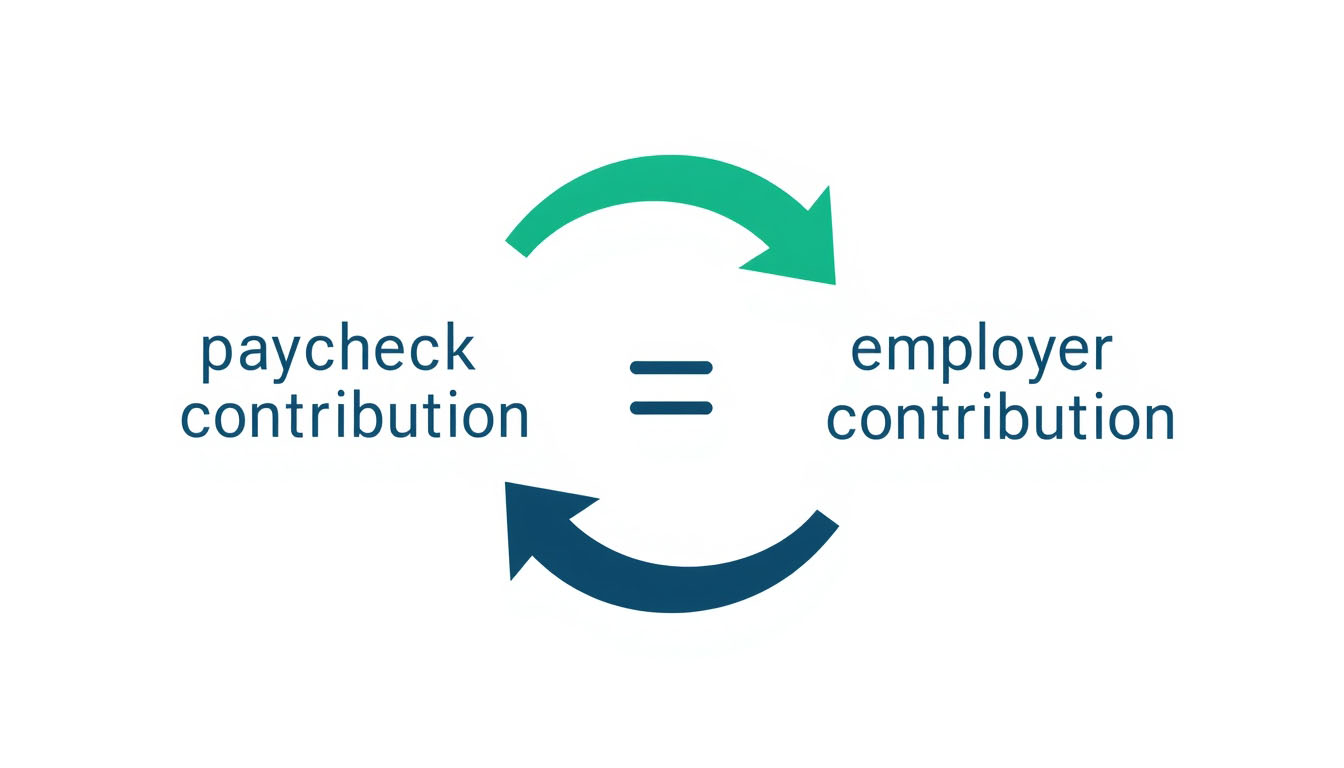
Employer matching is one of the strongest benefits in a workplace retirement plan
If your employer offers matching contributions in a 401(k), that feature can significantly accelerate your retirement savings. Yet many workers either misunderstand it or fail to take full advantage of it.
What employer matching means
Employer matching means your employer contributes money to your retirement account based on how much you contribute, up to a certain limit. For example, an employer might match a percentage of your contribution or match up to a percentage of your salary.
Why it matters so much
Matching contributions are valuable because they increase the money going into your retirement account beyond what you contribute yourself. That extra money can then grow over time alongside your own savings.
Common match structures
- 100% match up to a certain percentage of salary
- 50% match up to a certain percentage of salary
- Tiered or formula-based matching
The exact structure varies by employer, so it is worth reading your plan summary carefully.
What “full match” means
Getting the “full match” usually means contributing enough from your own pay to unlock the maximum employer contribution available under the plan. If you contribute less than that threshold, you may receive only part of the match.
Why people miss out
- They do not realize a match is offered.
- They delay enrollment.
- They contribute too little to reach the full match level.
- They assume they will increase contributions later and never do.
What vesting means
Some employer contributions are subject to a vesting schedule. That means you may need to stay with the employer for a certain amount of time before all matched funds fully belong to you. Your own contributions are generally yours, but employer money may follow plan-specific vesting rules.
Is matching always the first priority?
For many workers, yes. Contributing enough to capture the full employer match is often one of the most efficient first steps in retirement planning. After that, you can think more broadly about IRAs, tax diversification, and higher savings targets.
A simple way to act on this today
- Check whether your employer offers a match.
- Find out the formula and the contribution level needed for the full match.
- Adjust your contribution rate if needed.
- Review whether your plan offers automatic increases over time.
Final thoughts
Employer matching is easy to overlook because it often sits quietly in plan documents and HR materials. But over time, it can make a major difference. If your plan offers matching contributions, understanding the formula and acting on it should be near the top of your retirement to-do list.
For a fuller guide to 401(k)s, contribution strategy, rollovers, and retirement planning, visit The Essential 401(k) & IRA Retirement Guide and see the book on favorite store of choice.
