
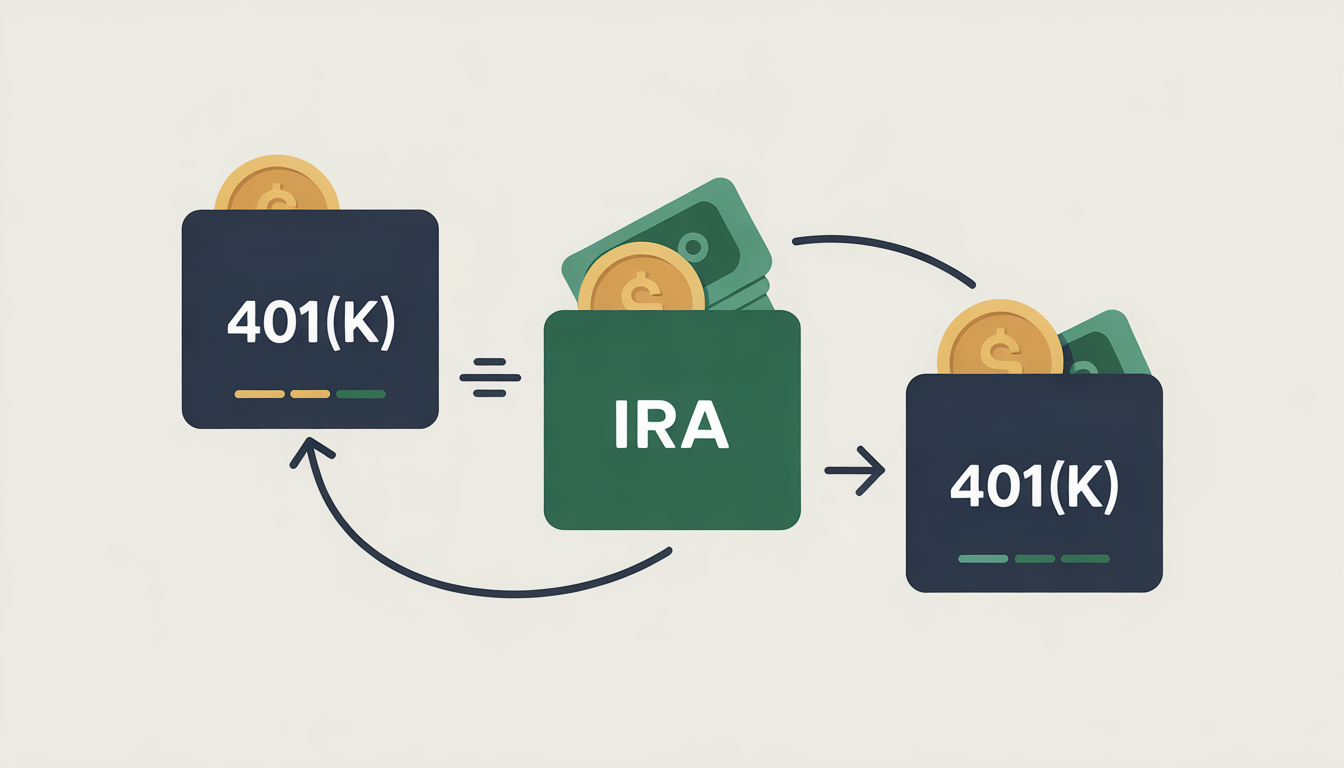
A rollover sounds technical, but the basic idea is simple
A 401(k) rollover means moving money from one retirement account to another without treating the move as a taxable withdrawal. This commonly happens after leaving a job, but it can also happen in other situations depending on plan rules.
Step 1: Decide where the money should go
Before moving anything, decide on the destination. Common choices include your new employer’s 401(k) or an IRA. The right choice depends on fees, investment options, convenience, and how you want your accounts organized.
Step 2: Confirm the receiving account details
If you are rolling into a new employer plan, confirm that the plan accepts rollovers. If you are rolling into an IRA, make sure the IRA is open and ready to receive the funds.
Step 3: Request a direct rollover if possible
A direct rollover usually moves the money straight from your old plan to the new retirement account. This is often the cleanest option because it reduces the chance of tax withholding issues and missed deadlines.
Step 4: Follow the transfer instructions carefully
Every provider has a process. You may need forms, account numbers, and verification steps. Read each instruction carefully and save all confirmation records.
Step 5: Verify that the money arrived correctly
Do not assume the rollover is complete just because the request was submitted. Log in to the receiving account and verify that the funds were deposited properly. Check how the money is invested once it arrives. Cash sitting uninvested is not the same as a completed strategy.
Step 6: Update your records
Keep copies of statements, confirmations, and rollover documents. This helps with organization and can make future tax or account questions easier to handle.
Why direct rollovers are usually preferred
When funds are paid directly between providers, there is less room for error. Indirect rollovers can create more complexity because the money comes to you first and must be redeposited within the required time frame. That process can lead to mistakes and unnecessary stress.
Questions to ask before rolling over
- What are the fees in the current plan and the new destination?
- How good are the investment options?
- Do I want more simplicity or more flexibility?
- Will moving the funds affect any future planning strategies?
Mistakes to avoid
- Cashing out instead of rolling over
- Missing paperwork or timing requirements
- Forgetting to invest the money after it arrives
- Moving funds without comparing fees and options first
Final thoughts
A 401(k) rollover is not only an administrative task. It is a strategic moment in your retirement journey. Handled well, it can simplify your accounts, improve your investment flexibility, and keep your long-term plan moving in the right direction.
For a deeper guide to rollovers, retirement account coordination, and long-term planning, visit The Essential 401(k) & IRA Retirement Guide and view the book on your preferred online shop.
