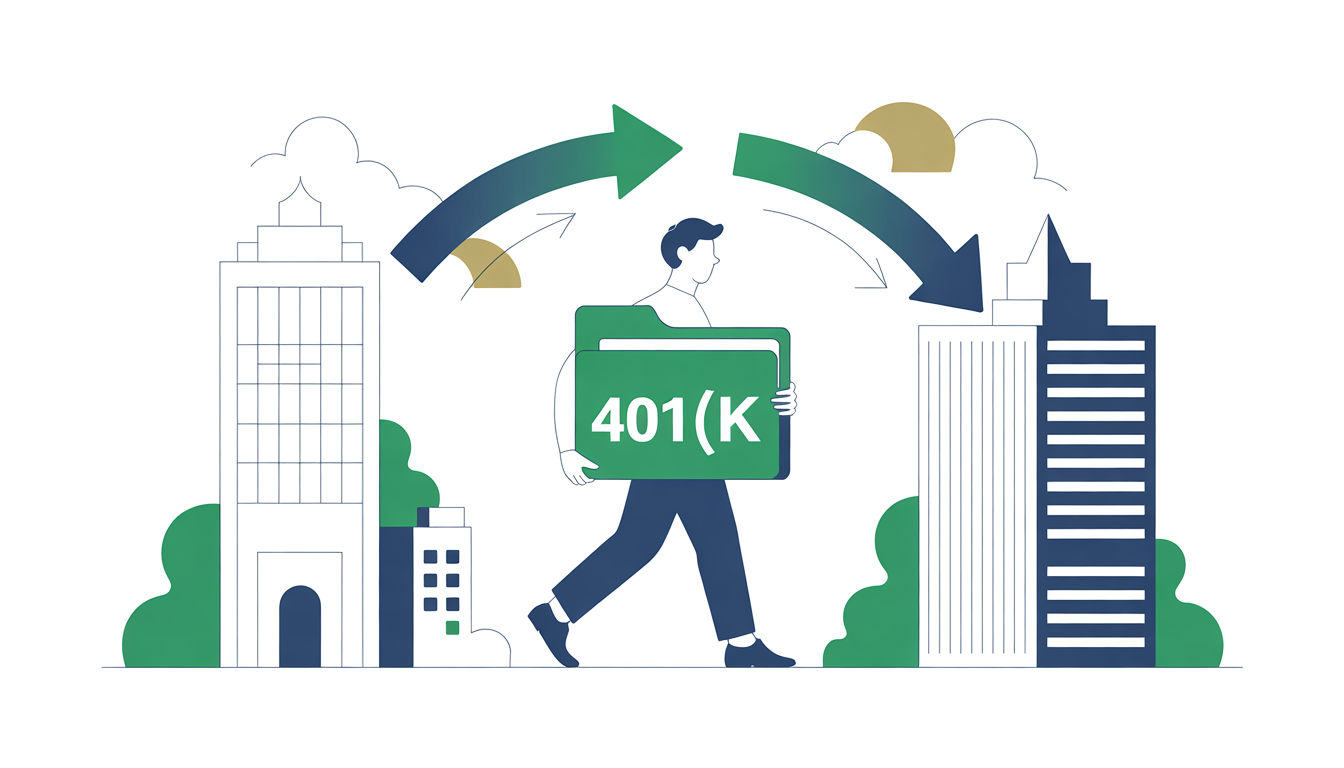
Leaving a job does not mean leaving retirement planning behind
When you change jobs, your old 401(k) does not disappear. But the decisions you make next can affect fees, taxes, investment choices, and long-term retirement growth. That is why it is worth slowing down and understanding your options before you act.
Your main 401(k) options after leaving a job
- Leave the money in the old employer plan
- Roll it into your new employer’s 401(k), if allowed
- Roll it into an IRA
- Cash it out
Option 1: Leave it where it is
Some plans let former employees keep their money in the account. This can be convenient if the plan has strong investment options and low fees. However, you may no longer be able to contribute, and some people end up forgetting old accounts over time.
Option 2: Move it to your new employer’s plan
If your new employer offers a 401(k) and accepts rollovers, this can help consolidate accounts. It may make your retirement savings easier to track and manage. It can also be useful if you prefer keeping workplace savings in one place.
Option 3: Roll it into an IRA
Rolling an old 401(k) into an IRA often gives you more investment flexibility and more control over the account. This is a common choice for people who want a broader range of funds or a simpler long-term account structure.
Option 4: Cash it out
This is usually the most expensive choice in the long run. You may owe taxes, and if you are below the applicable age threshold, you may also face penalties. On top of that, you lose the future growth that money could have produced. For many savers, cashing out turns a short-term move into a long-term setback.
Direct rollover vs indirect rollover
- Direct rollover: The money moves directly from one retirement account provider to another. This is usually the cleanest and safest option.
- Indirect rollover: The money is paid to you first, and then you must redeposit it into another retirement account within the required time window. This creates more room for mistakes and tax complications.
Questions to ask before choosing
- What fees does the old plan charge?
- How strong are the investment options?
- Does the new employer plan accept rollovers?
- Would an IRA give you better flexibility?
- Are there any plan features you would lose by moving the funds?
Common mistakes to avoid
- Cashing out without understanding the tax cost
- Forgetting old accounts after multiple job changes
- Using an indirect rollover when a direct rollover is available
- Moving the account without comparing fees and investments first
Why consolidation can help
As careers grow longer, many people accumulate several retirement accounts. Consolidating where appropriate can make your overall plan easier to manage. It becomes simpler to track asset allocation, rebalance, and estimate future retirement income.
Final thoughts
An old 401(k) is still part of your future. Leaving a job gives you a chance to clean up your retirement structure, but only if you make that transition carefully. The best move depends on the quality of your plan options, your need for flexibility, and your long-term strategy.
For a deeper look at rollovers, account coordination, and avoiding expensive mistakes, visit The Essential 401(k) & IRA Retirement Guide and see the book on your preferred online shop.
