
Why the Traditional vs Roth decision matters
If you are opening an IRA, you will likely need to choose between a Traditional IRA and a Roth IRA. Both can help you save for retirement, but they work differently when it comes to taxes.
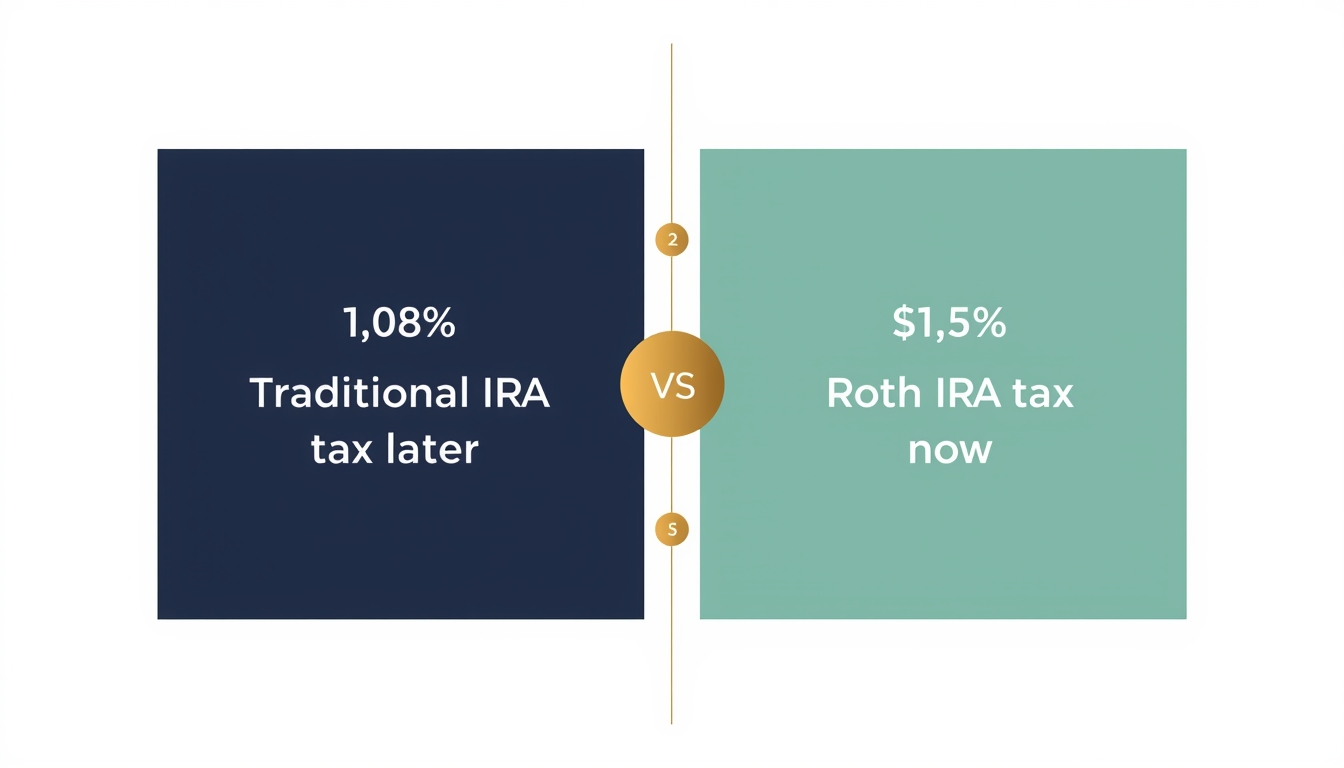
The simplest way to think about the difference is this: a Traditional IRA may give you a tax benefit now, while a Roth IRA may give you a tax benefit later.
How a Traditional IRA works
With a Traditional IRA, your contribution may be tax-deductible depending on your income and whether you have access to a workplace retirement plan. The money grows tax-deferred, which means you generally do not pay taxes on investment growth each year while it stays in the account.
When you withdraw money in retirement, those withdrawals are generally taxed as ordinary income.
How a Roth IRA works
With a Roth IRA, contributions are made with money that has already been taxed. In exchange, qualified withdrawals in retirement can be tax-free. That includes both your contributions and your investment growth, provided you meet the applicable rules.
The core tradeoff
- Traditional IRA: possible tax break now, taxes later
- Roth IRA: taxes now, potential tax-free withdrawals later
When a Traditional IRA may appeal more
- You want a possible deduction today.
- You expect to be in a lower tax bracket in retirement.
- You value reducing current taxable income.
When a Roth IRA may appeal more
- You think your tax rate in retirement may be the same or higher.
- You want tax-free qualified withdrawals later.
- You like the idea of tax diversification in retirement.
Important income rules
IRA rules are not one-size-fits-all. The ability to deduct Traditional IRA contributions or contribute directly to a Roth IRA can depend on your income level and filing status. That is one reason it helps to review current eligibility rules each year.
Can you have both?
Yes, depending on your situation. Some people use both over time or shift strategy as income changes. Others combine workplace accounts with either a Traditional or Roth IRA to diversify how their future retirement income will be taxed.
A practical way to think about the choice
If you value the tax break now and expect lower taxes later, a Traditional IRA may feel more attractive. If you value future tax-free withdrawals and want more tax certainty in retirement, a Roth IRA may be the better fit.
It is also reasonable to admit you do not know exactly what future tax rates will be. That is why many savers appreciate holding a mix of account types rather than relying entirely on one tax treatment.
Common mistake to avoid
Do not choose an IRA type based only on what sounds popular or what someone else prefers. The better question is how the account fits into your income, tax picture, and retirement timeline.
Final thoughts
Traditional and Roth IRAs are both useful tools. Neither is automatically better in every case. The real win is understanding how each works so you can use the one that supports your broader retirement plan.
For a fuller guide to IRAs, 401(k)s, contributions, and retirement decision-making, visit The Essential 401(k) & IRA Retirement Guide and see the book on your preferred online shop.
