Why this comparison matters
If you are trying to save for retirement, one of the first questions you will run into is whether a 401(k) or an IRA is the better choice. Many people assume they have to pick one or the other, but the truth is that both accounts can play an important role in a smart retirement plan.
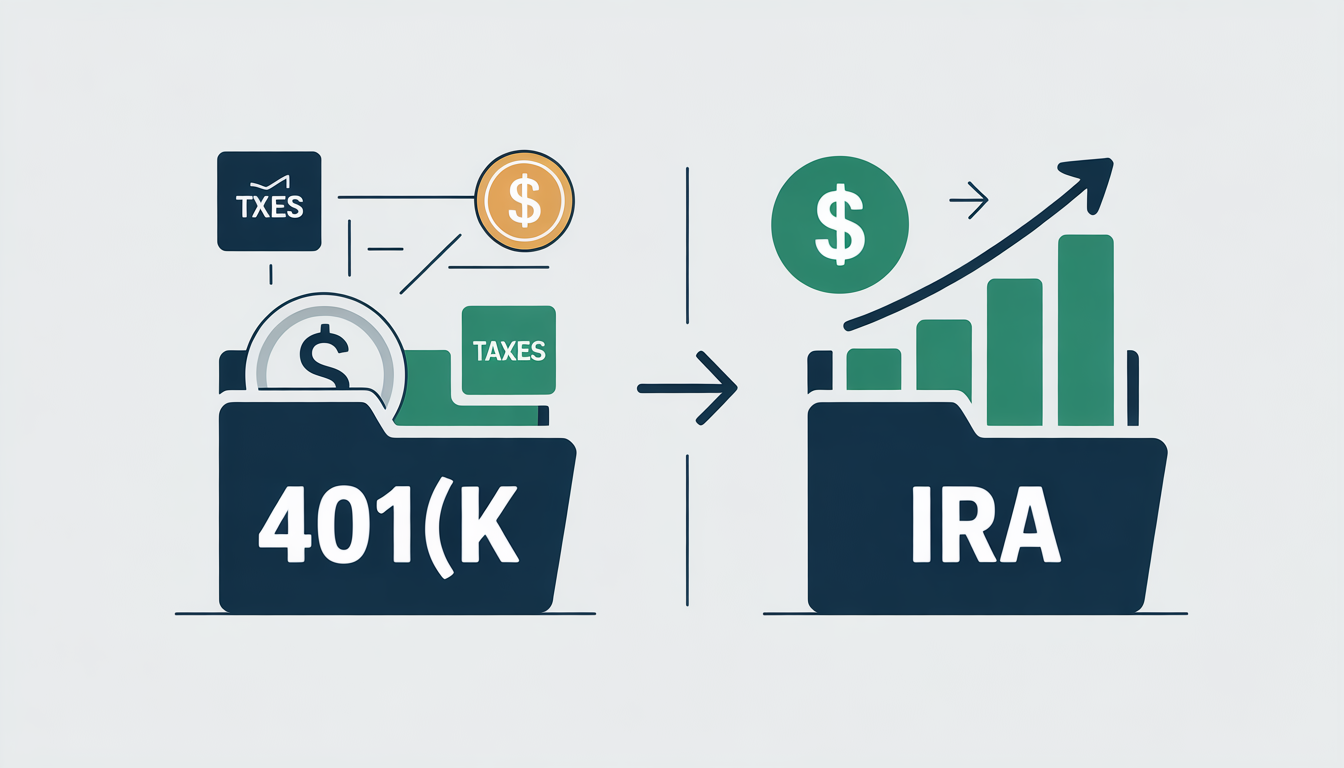
A 401(k) is usually offered through an employer. An IRA is an individual account you open on your own. They both provide tax advantages, but they differ in how much you can contribute, how the money is invested, and how much control you have over the account.
What a 401(k) is
A 401(k) is a workplace retirement account. You contribute money directly from your paycheck, which makes saving more automatic. In many cases, your employer may also offer a matching contribution. That match is one of the biggest reasons a 401(k) is so valuable.
Traditional 401(k) contributions are generally made before taxes, which can reduce your taxable income today. Some employers also offer a Roth 401(k), where contributions are made after tax in exchange for tax-free qualified withdrawals later.
What an IRA is
An IRA, or Individual Retirement Account, is something you open independently through a brokerage or financial institution. It is not tied to your employer, which means you keep it regardless of where you work.
There are two main types: the Traditional IRA and the Roth IRA. A Traditional IRA may offer a tax deduction now, while a Roth IRA offers tax-free qualified withdrawals later. Eligibility for deductions or Roth contributions can depend on income and whether you are covered by a workplace plan.
The biggest differences
1. Where the account comes from
A 401(k) comes through your job. An IRA comes through you.
2. Contribution limits
401(k) accounts usually allow much higher annual contributions than IRAs. That makes them powerful tools for people who want to save aggressively for retirement.
3. Employer match
IRAs do not come with employer matching. If your employer matches 401(k) contributions, that is often the first place to focus because matching money is part of your compensation.
4. Investment choices
401(k) plans often come with a limited menu of funds chosen by the plan provider. IRAs usually offer more flexibility and a wider range of investments.
5. Fees and control
With an IRA, you often have more direct control over fees, providers, and investment selection. A 401(k) may have plan-level fees and fewer options, though many plans are still excellent savings tools.
Which one should you choose first?
- Contribute enough to your 401(k) to get the full employer match.
- Then consider funding an IRA for additional flexibility.
- After that, return to the 401(k) if you still have room to save more.
This order can help you capture free employer money while also gaining more control over the rest of your retirement investing.
When a 401(k) may be the better starting point
- Your employer offers a match.
- You want automatic paycheck contributions.
- You want to contribute more than the IRA annual limit allows.
- You are looking for a simple way to build retirement savings consistently.
When an IRA may be especially useful
- You want more investment options.
- You want to choose your own provider.
- You do not have access to a workplace retirement plan.
- You want more flexibility around account setup and management.
Can you use both?
Yes. In fact, many strong retirement plans use both. A 401(k) helps you save through work, and an IRA can give you more flexibility and added tax diversification depending on whether you choose Traditional or Roth.
Common mistake to avoid
One of the most common mistakes is delaying retirement saving because you feel unsure which account is “perfect.” The better move is to start with the best available option now and improve as you learn more. Time in the market matters more than endless comparison.
Final thoughts
The right choice is not always 401(k) or IRA. It is often 401(k) and IRA, used in the right order and for the right reasons. What matters most is understanding how each tool works and using them intentionally.
For a fuller step-by-step explanation of retirement accounts, contribution strategy, rollovers, and long-term planning, explore The Essential 401(k) & IRA Retirement Guide and see the book on your preferred online shop.
